To our products

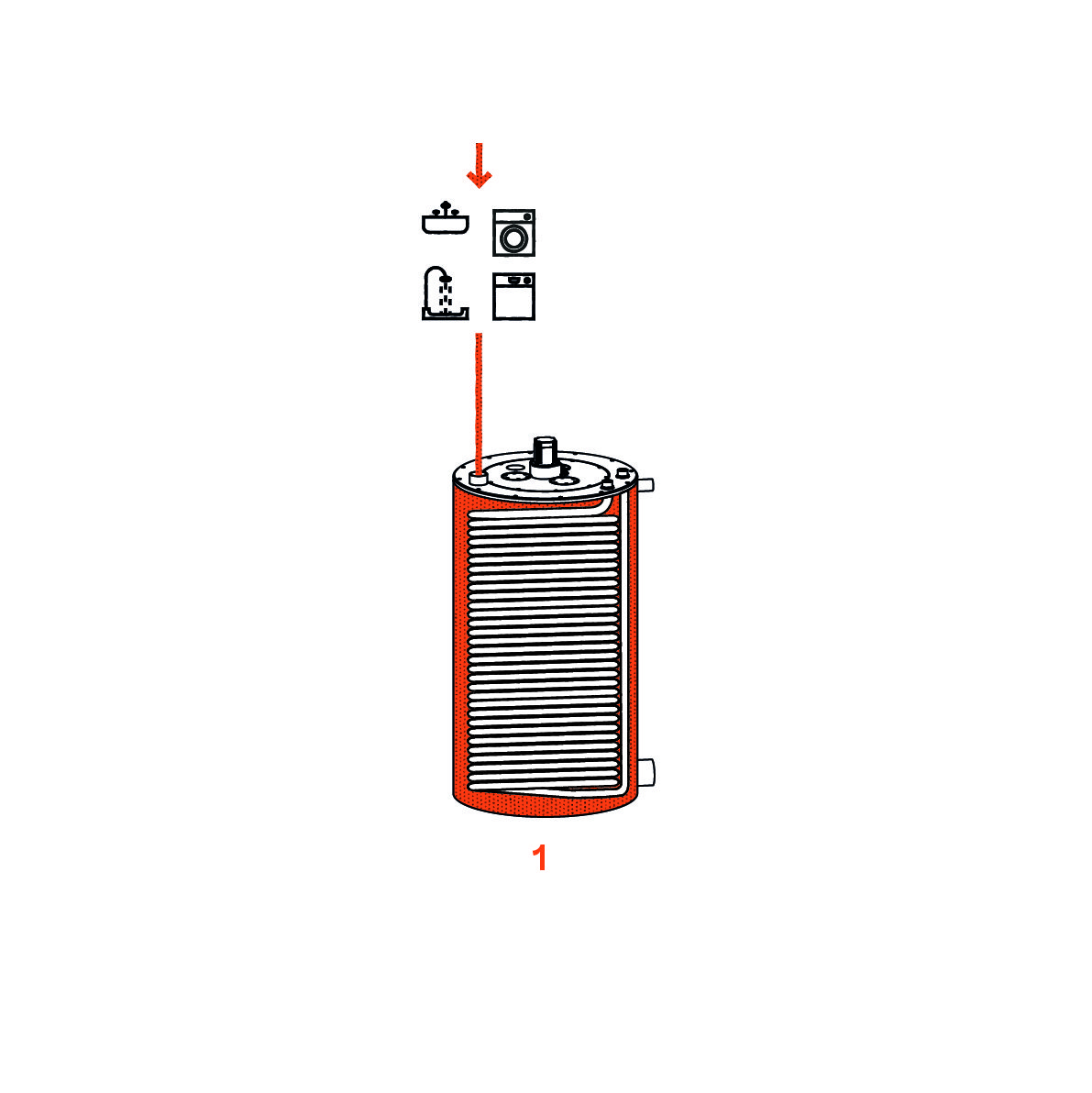
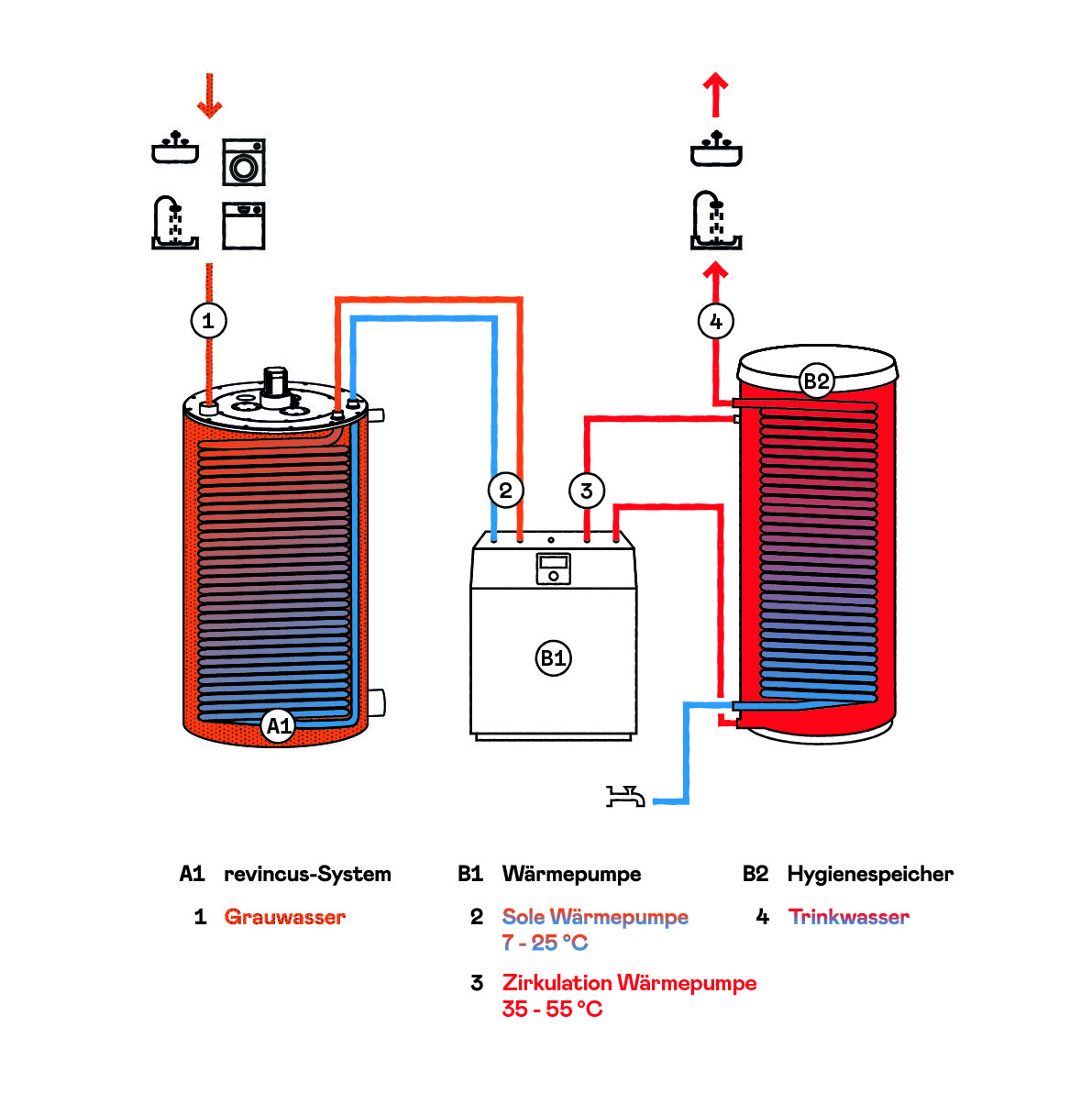
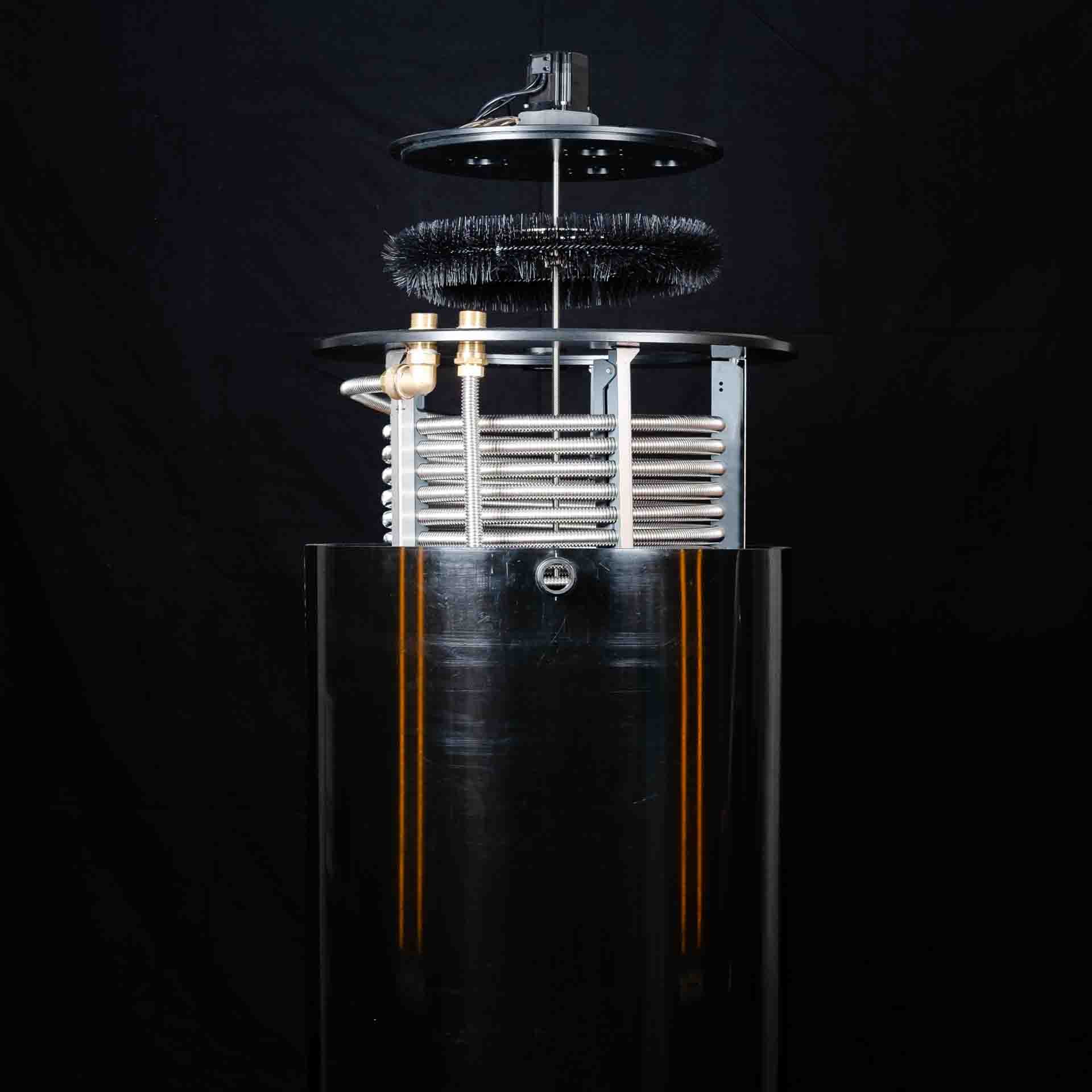
1The revincus wastewater heat exchanger captures the warm greywater directly at the downpipe of the house.
If there is no separate waste pipe for greywater in your house, we offer a solution for retroactively separating greywater and blackwater using our wastewater diverter.
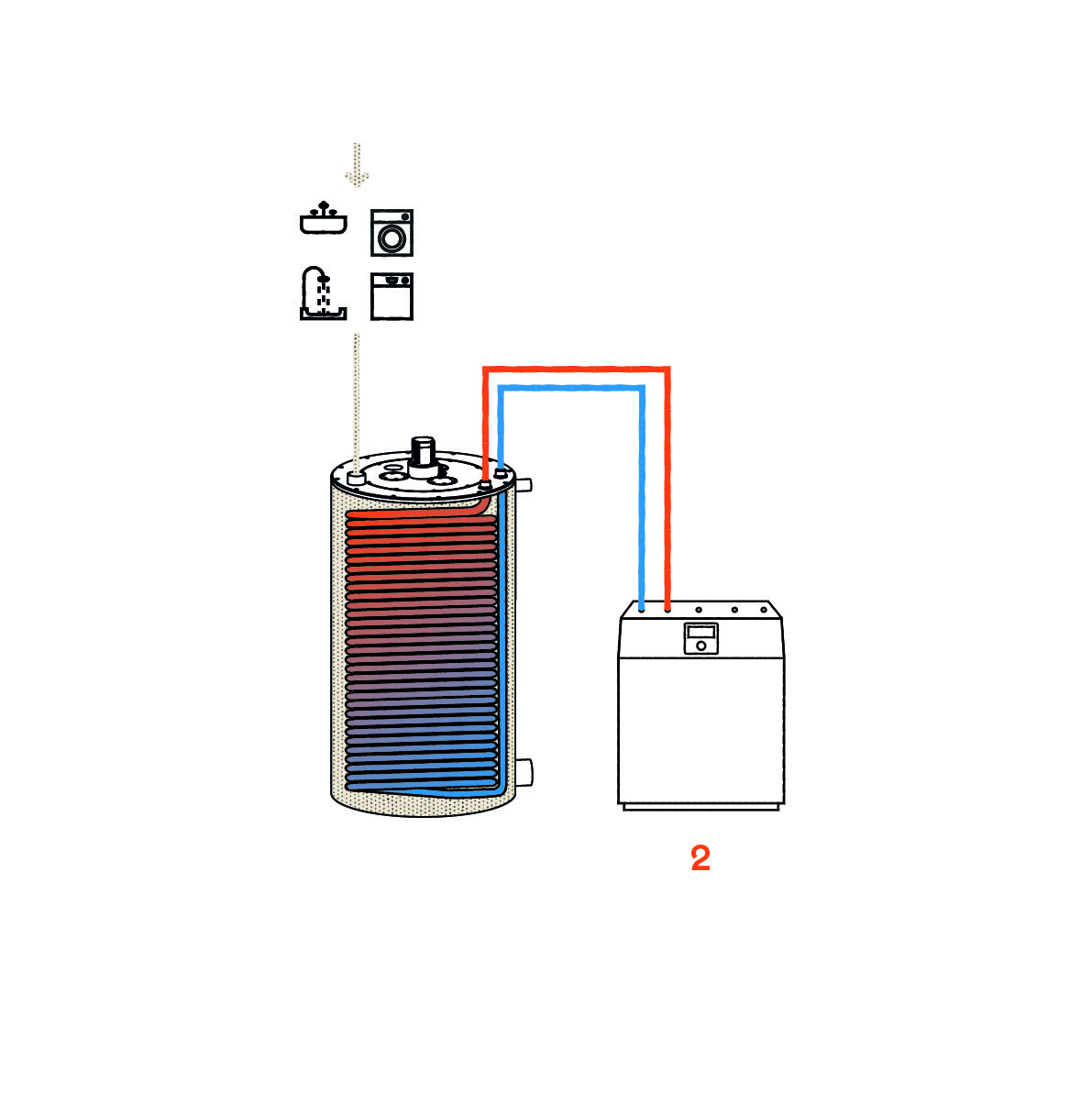
2The heat from the wastewater is transferred to the brine of a brine-water heat pump through a revincus wastewater heat exchanger.
The efficiency of the heat pump (COP of 4 – 5 in the high-temperature range) is significantly increased by the heat of the wastewater, thus consuming less electricity.
For comparison: the average COP of heat pumps in the domestic sector is between 3 and 3.5.
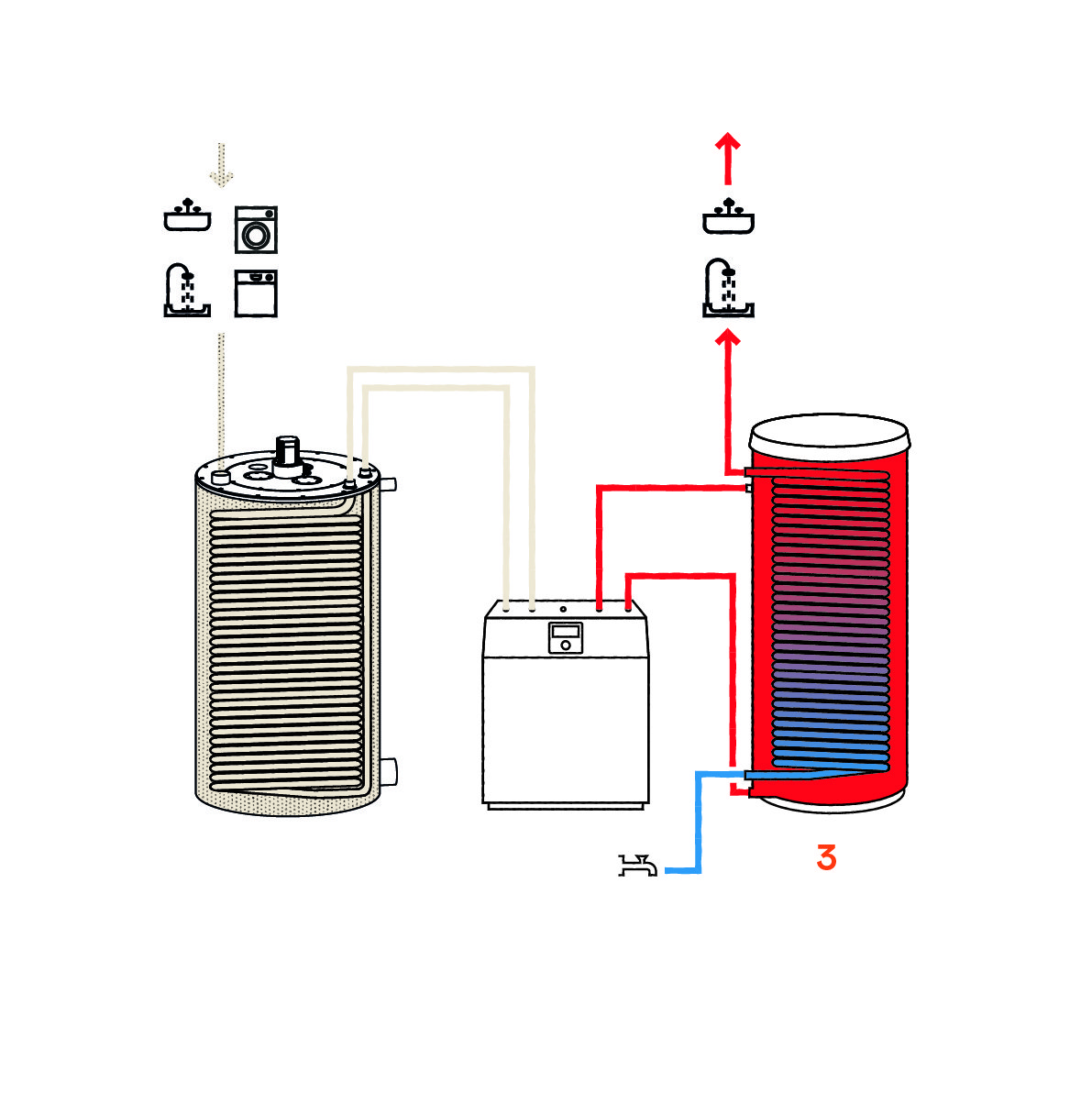
3 The heat is now, as is common in multi-story residential buildings, provided to the apartments via a buffer tank for hot drinking water.
The water heated to 60° by the heat pump now meets the requirements of the Drinking Water Ordinance according to § 3 number 12 TrinkwV.
Most efficient heat pumps using heat from wastewater.
Due to the high supply temperature from the wastewater, particularly efficient heat pumps (COP 4–5) can be used.

Up to 65% eligible for funding.
Wastewater heat recovery can be credited towards the share of sustainable energy in your building

Economically viable from 20 residents.
Applies to the living area.
High temperature for drinking water.
The heating of drinking water and thus the high-temperature range can be efficiently covered with wastewater heat recovery. This opens the way to consider air-to-air heat pumps, low-temperature heating, or even infrared as building heating.
Wastewater heat recovery is efficient all year round.
High temperatures can be efficiently generated using heat from wastewater, independent of weather and season.

Low planning and investment effort.
Compared to common methods, such as deep drilling or surface collectors, the effort to use wastewater as a heat source is low.